


The Great Experiment
USS Enterprise Refit – 1:350 Scale | Motion Picture Build
Project Overview
The Great Experiment is a museum-grade, fully illuminated 1:350 scale build of the USS Enterprise Refit from Star Trek: The Motion Picture (1979). Completed over nearly two years, this project represents one of the most technically advanced model builds undertaken at Louis Models.
The goal was to push a standard kit far beyond its intended limits by integrating advanced electronics, custom fabrication, and screen-accurate detailing into a single cohesive display piece.
Key features include:
Over 400 individually adjustable RGBW LEDs
Customized lighting effects
Photo-etched detailing throughout
3D printed interior and exterior upgrades
Sound integration and interactive control systems
HDMI-based video playback elements
iPad-controlled lighting system

Design Philosophy & Engineering Approach
Having previously built the same kit, I was familiar with its structural limitations. However, this project demanded a complete rethinking of how the model would be constructed.
Every structural decision had to account for:
Internal lighting pathways
Wiring access and potential maintenance
Sequential routing for LEDs
Long-term structural stability
The model effectively became a kind of hybrid between traditional modelmaking and advanced computer systems.


Surface Preparation & Light Control
All kit components were thoroughly cleaned and prepped to remove mould release agents and ensure optimal paint adhesion.
With hundreds of internal light sources, light blocking was a critical structural requirement rather than a cosmetic step. Every internal surface was treated to prevent unwanted light bleed and ensure illumination appeared only where intended.
This phase significantly aided in addressing light leak issues towards the end of the construction.

Interior Detail Construction
A major design goal was to include visible interior environments that added depth through the ship’s windows and openings.
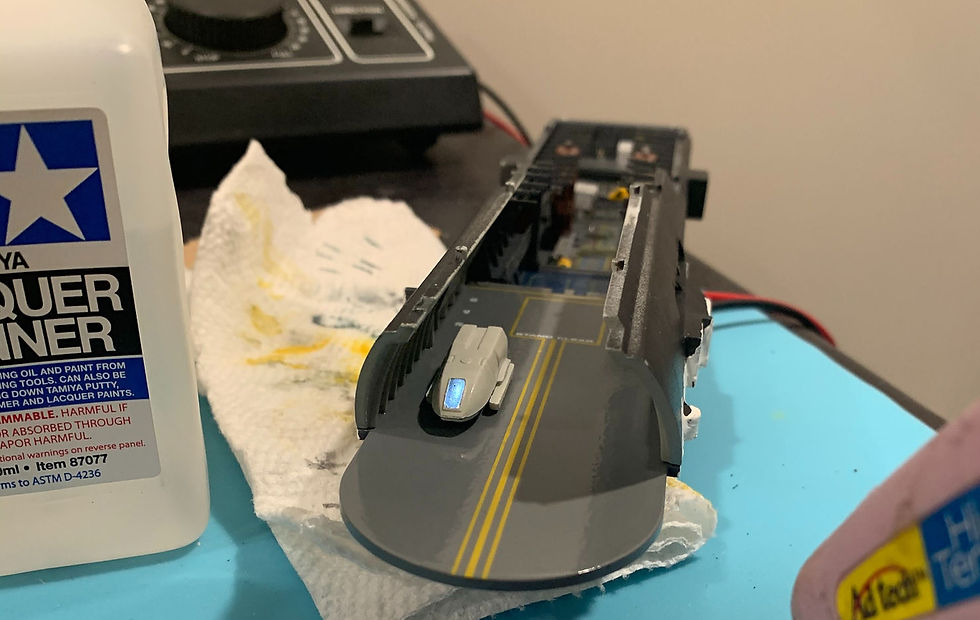
Shuttle Bay
The included shuttle bay was extensively modified using photo-etched components, precision masking, and custom lighting integration. A fully illuminated shuttlecraft was installed with a custom-fabricated translucent window.




Interior Spaces
Additional environments included:
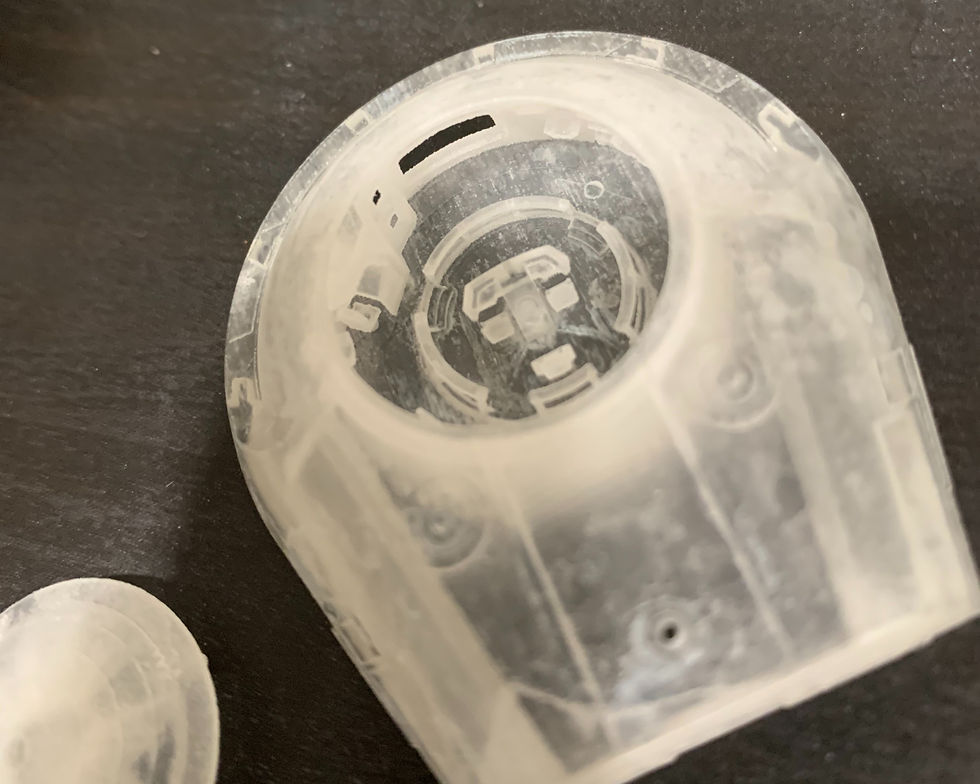
Arboretum with miniature terrain landscaping
Recreation Room (resin printed)
Officers’ Lounge
Bridge interior detailing upgrades (resin printed)




Electronics & Lighting System
At the core of the build is a fully customizable RGBW lighting system.
Each LED is individually controlled through a serial data chain, enabling precise lighting behaviour across the entire ship. This allows for dynamic sequences, animated effects, and synchronized system responses.
Unlike traditional parallel wiring systems, this approach required careful planning of:
Data integrity across long runs
Power distribution balancing
Access for maintenance and troubleshooting


Structural Engineering Challenges
Like many large-scale kits, significant structural corrections were required throughout assembly.
Key areas included:
Nacelle seam correction and alignment
Neck reinforcement and fitment adjustment
Secondary hull restructuring
Saucer alignment and balancing
The most critical challenge was achieving perfect alignment between the saucer and secondary hull. Custom shimming and epoxy reinforcement were used to correct structural imbalance.

Masking, Paintwork & Aztec Finishing
The final surface finish was achieved using a full Aztec masking system by MaskDesign (Gary Chomiak), combined with Mission Models paints.
Each hull section was masked in layered stages to create subtle tonal variation across the surface. The Aztec patterning was applied using carefully controlled iridescent colour transitions and dilution ratios of red, green, blue, and gold.
The nacelles and major seams required additional correction prior to final finishing to ensure a seamless visual result.


Final Assembly & Integration
Once painting and clear coating were complete, all major assemblies were brought together for final integration.
This stage required precision alignment across the full length of the model, ensuring structural symmetry and maintaining internal wiring integrity.
Final system checks were performed across all lighting and electronic systems prior to completion.


Final Photography
The completed model was professionally photographed by Bill Johnston Photography, whose expertise helped capture both surface detail and internal illumination.
The final images showcase the model as a fully realized display piece, highlighting both craftsmanship and it's visual complexity.
Finished Enterprise Refit captured under professional studio lighting conditions.
Conclusion
The Great Experiment represents far more than a completed model—it represents nearly two years of learning, problem-solving, and pushing the boundaries of what I thought was possible within a scale model.
Every stage of this project presented a new challenge. From complex electronics and custom lighting systems to structural modifications, interior detailing, and the painstaking application of the Aztec paint scheme, there were countless moments where progress required patience, experimentation, and a willingness to find solutions that weren't outlined in any instruction manual.
What began as a desire to build a screen-accurate replica of the USS Enterprise Refit evolved into something much larger. It became an opportunity to combine traditional modelmaking techniques with modern fabrication methods, advanced electronics, and custom-designed components into a single cohesive piece. The result is a model that not only captures the appearance of the original filming miniature, but also reflects the passion, dedication, and craftsmanship invested throughout the entire process.
Looking back, this project remains one of the most technically demanding and personally rewarding builds I have completed. It challenged me as a builder, expanded my skills, and reinforced the importance of continually striving for a higher standard with every project.
At Louis Models, that pursuit of excellence continues to guide every commission and personal build. The Great Experiment stands as a milestone in that journey, and a reminder of what can be achieved when craftsmanship, creativity, and perseverance come together in pursuit of a single vision.
Comments